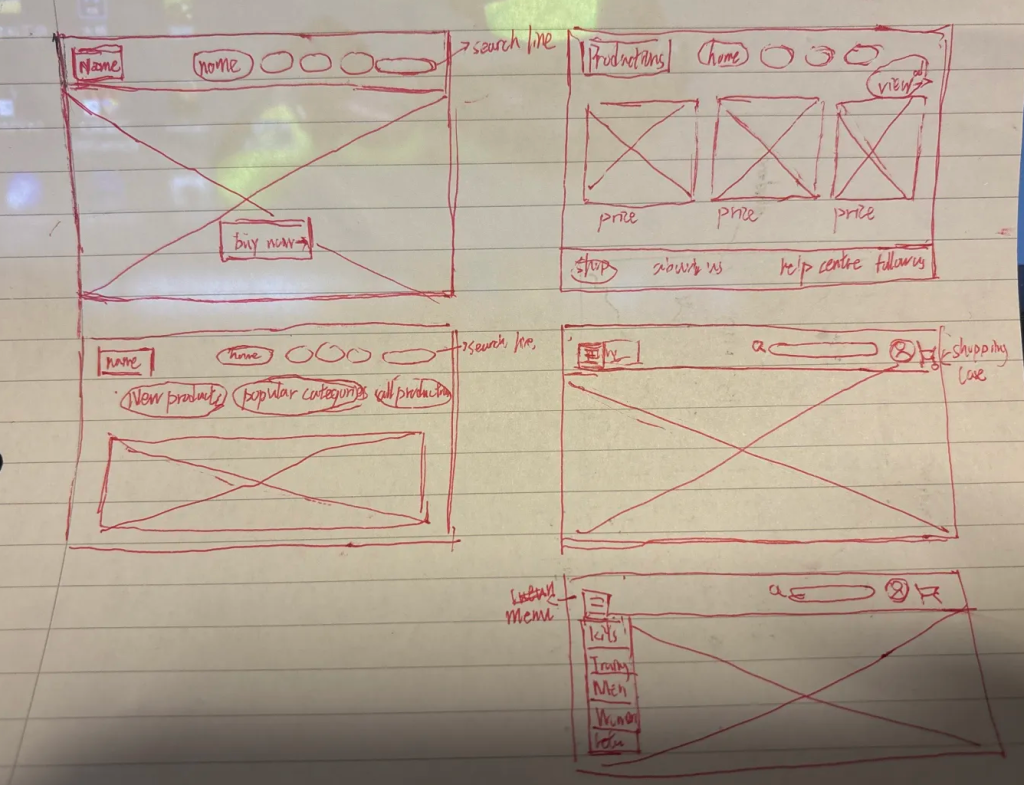
In this task, I will compare the operational models, industry contexts and other practical approaches of large-scale companies with those of smaller firms.
Task 1 : Collaboration in industry
I have decided to conduct separate research studies on Adidas and Gymshark. Adidas is a German multinational sportswear and footwear company headquartered in Herzogenaurach, Germany. It is Europe’s largest sports brand and the world’s second-largest manufacturer, surpassed only by Nike. The group also holds an 8.33% stake in Bayern Munich Football Club. In the realm of football, it has signed contracts with a host of star players, including Lionel Messi [one of Adidas’s key brand ambassadors (on a lifetime contract)], Jude Bellingham, Mohamed Salah, and many other highly influential players of today.
As for Gymshark, a British multinational sportswear retailer, its business model is primarily focused on online sales via its official website. It builds brand awareness through collaborations with specialist bloggers and product reviews, and drives sales through product promotion. In essence, this approach differs significantly from that of Adidas: one relies on celebrity endorsements, brand prestige and a vast fan base, whilst the other focuses on influencer promotion and the practicality of its products.
Case Studies:
The following is a case study I have examined, based on a new advertisement from Adidas. As a recently launched campaign, the advert centres on a fictional, surreal, timeless hotel. Rather than serving as a conventional product launch, it functions as a cultural statement, with Samuel L. Jackson once again taking on the role of narrator and protagonist. He wanders through endless corridors in search of the ‘Superstar’—a symbol of both the shoe itself and cultural icons. Superstar culture encompasses graffiti and street art, as well as fashion trends (streetwear and retro styles). It promotes the idea that the Superstar is no longer just a shoe, but an ‘attitude’. The various elements in this advert also echo the core of the Superstar: the black-and-white colour scheme and the star-studded cast spanning music, fashion and sport not only showcase the product’s classic design but also convey the brand’s positioning that ‘classics never go out of style’, whilst offering a unique way to leave a lasting impression on the viewer.
As for Gymshark, a social media-driven brand, they have a significant presence across multiple platforms (Instagram, TikTok, YouTube, Facebook and Twitter). Over the past 12 months, their brand accounts have published approximately 4,200 posts. They have generated nearly 60 million interactions over the past 12 months, with their video content garnering close to 350 million views – a key format featured on Gymshark’s brand pages.
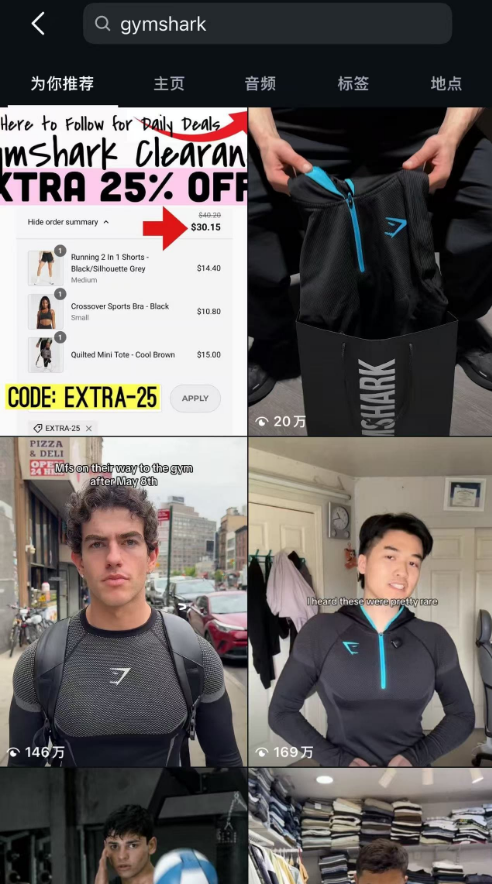
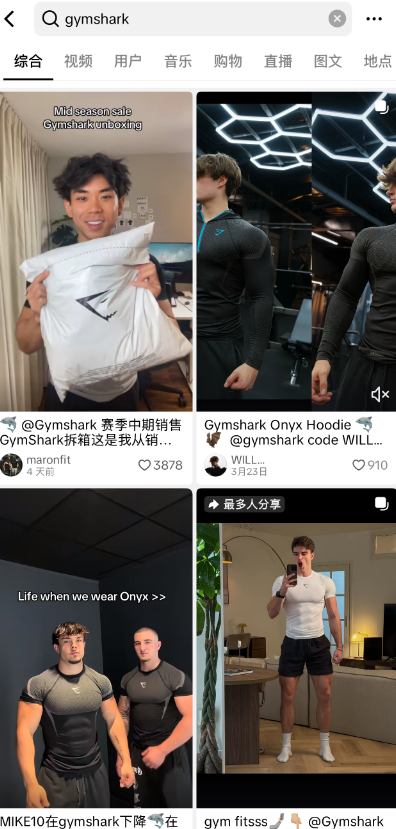
This also highlights how smaller companies approach marketing differently from their larger counterparts. Rather than relying on high-profile celebrities, Gymshark has chosen to focus on the social media platforms most frequently used in today’s digital age, channelling its resources into promoting the technological features of its products.
It is also a way of breaking new ground by taking a different approach from large companies
Task 2 :Understanding the client & context
Classic Football Shirts is a UK-based retailer specialising in authentic classic, rare, vintage and contemporary football shirts and related apparel. Founded in Manchester in 2006 by Matthew Dale and Doug Bierton, the company operates an extensive e-commerce platform. “Ensuring that the fabric of football is preserved. We are committed to curating the world’s most comprehensive collection, weaving football’s design, culture and history into every shirt.”That is their brand philosophy
Target audience
CFS has a wide audience; given the popularity of football in the UK, it appeals to people of almost all ages, with teenagers and football memorabilia collectors forming the core demographic. These two groups have a particularly high demand for CTS; football shirts are no longer merely garments worn on the pitch, but are now closely associated with fashion and streetwear.
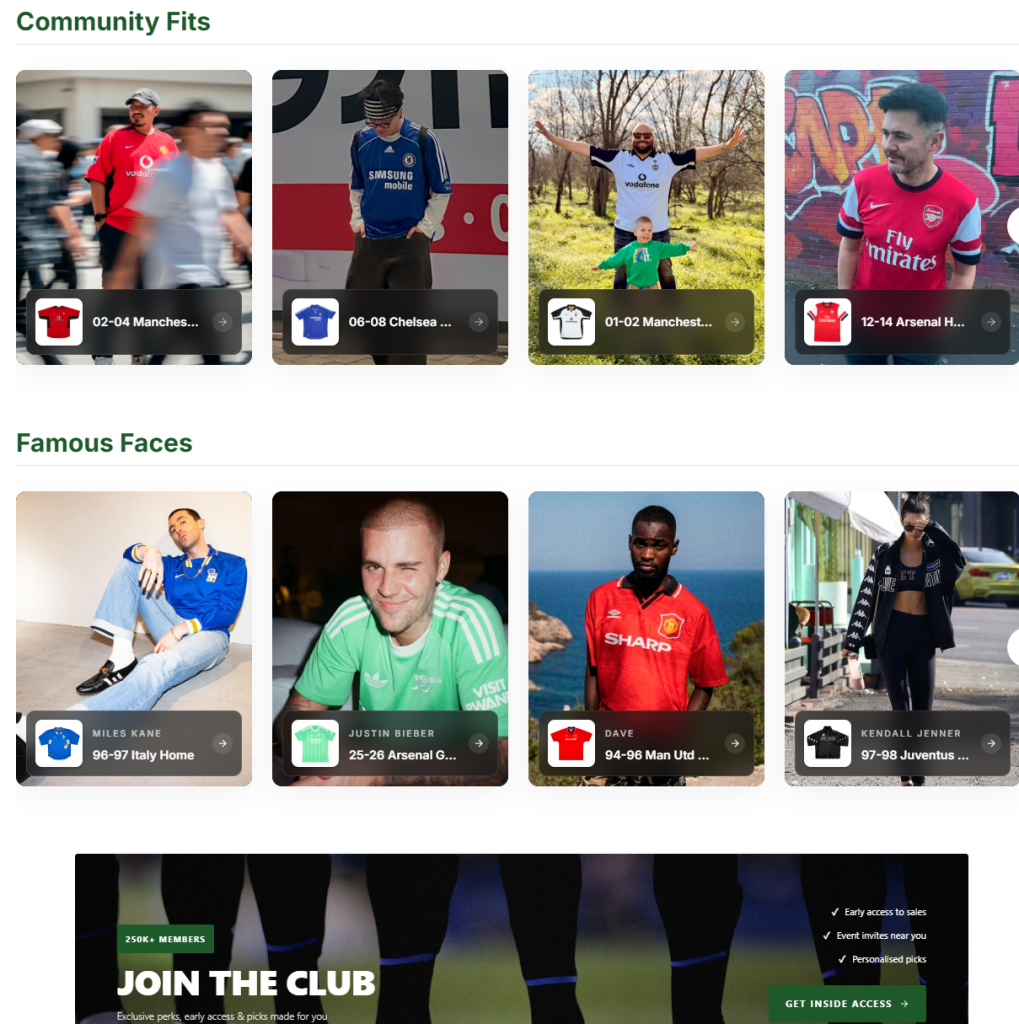
Nowadays, football shirts are more than just football shirts; they have become synonymous with retro style and fashion. Many celebrities wear them in their everyday lives, which has in turn boosted people’s enthusiasm for them.
Visual language
It is built around the concept of ‘vintage football culture + collectible value + community identity’. The website’s CTAs are clear, but the overall layout is somewhat complex; the excessive number of products displayed side by side can cause user fatigue, and the wide variety of shirt colours makes the site appear somewhat cluttered.
competitor
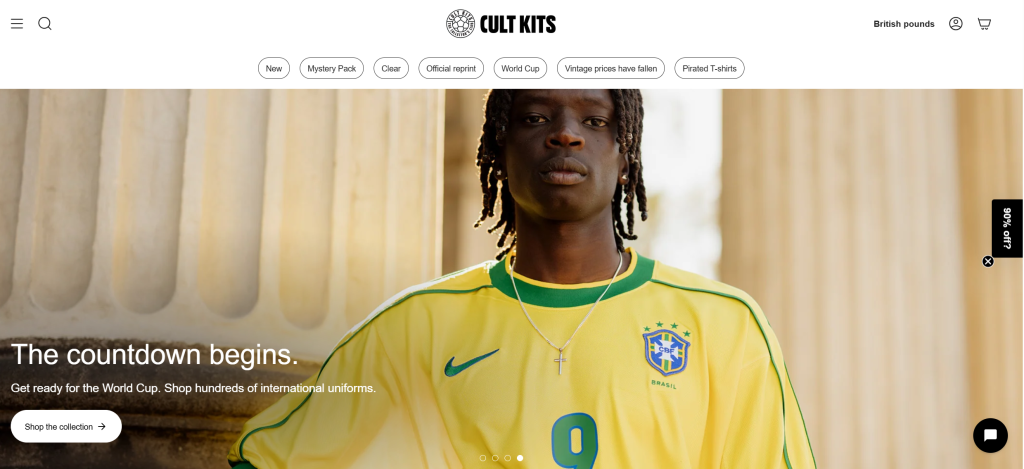
The competitor I’ve been researching is called Cult Kits. This company operates on almost exactly the same model as CFS, featuring various sections such as retro and bestsellers, covering a wide range of categories. However, their underlying navigation logic differs: Cult Kits is browsing-driven, similar to some streetwear websites, where users make their selections based on recommendations on the homepage and key information. CFS, on the other hand, is search-driven. Although the homepage displays various types of football shirts, just like CK, the primary sales method for CFS is precise, point-to-point searching via the search bar. This results in slight variations in their target audiences. CK, akin to a streetwear brand, primarily targets trendsetters and fashion-conscious groups. CFS, on the other hand, operates as a large-scale stock retailer catering to virtually all age groups, offering specific selections for particular demographics. Consequently, its traffic and sales figures are significantly higher than CK’s, reflecting a difference in overall scale.
Task 3: Concept development
We aim to showcase the kits worn by captains across successive World Cups, highlighting the transition from player to spectator and forging a connection between the two through the shared bond of the kit. By launching a kit catalogue featuring more story-driven content—and by highlighting the history behind specific kits, iconic players, matches or tournaments—we hope to foster a deeper emotional connection with our target audience.
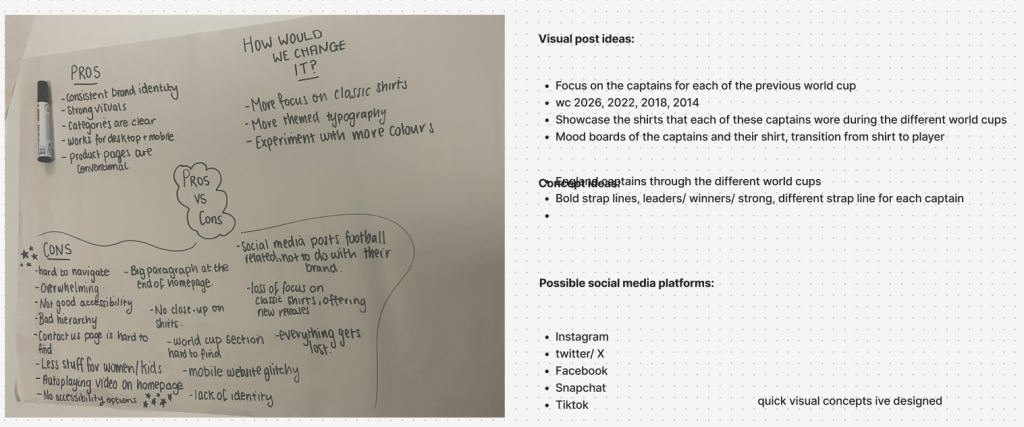
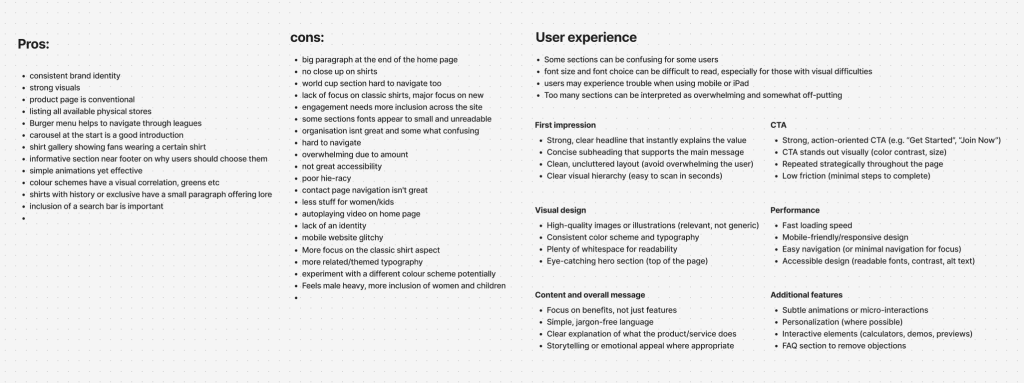
By comparing the strengths and weaknesses of different brands, we can identify the best solution on the market. Some have shifted their focus away from classic kits, instead prioritising new product launches, experimenting with a wider range of colours and themed designs, and engaging with social media, amongst other things.
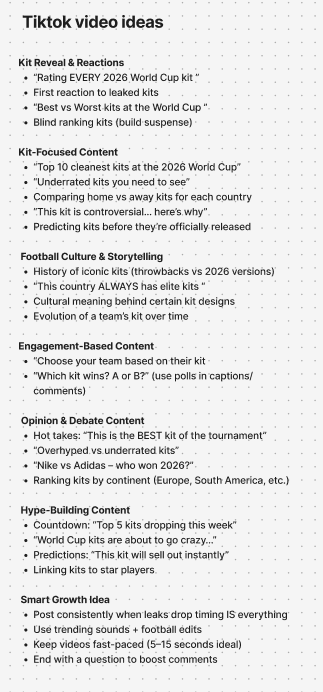
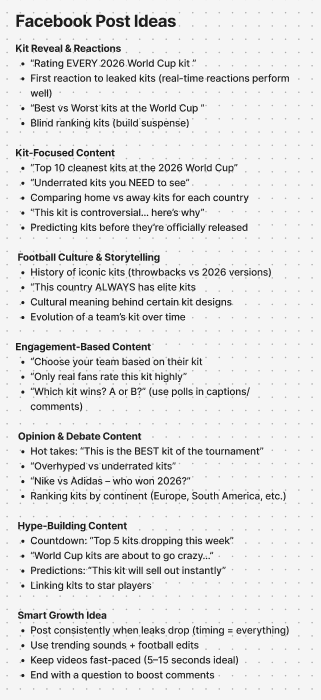
Using creative ideas from social media to improve website design